

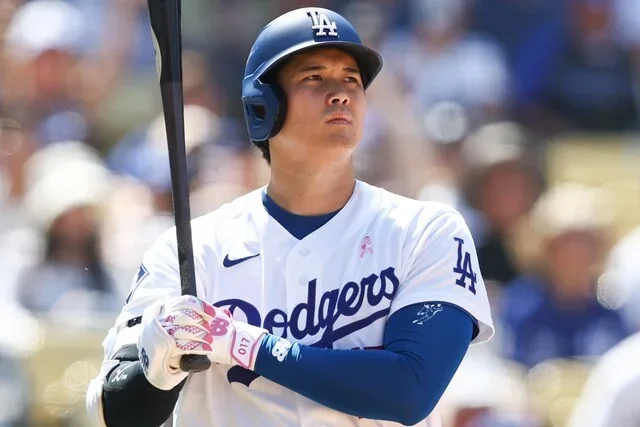
Shohei Ohtani is enduring a tough stretch, unable to elevate the ball and produce ideal at-bats.
The daily battle continues. On May 10, Ohtani started as the leadoff hitter and designated hitter against the Braves at Dodger Stadium, going 0-for-4 for his first hitless game in four outings.
The ball simply isn’t carrying. The 31-year-old slugger has now gone 10 consecutive games without a home run, posting a .154 batting average, zero homers, a .290 on-base percentage, and a .192 slugging percentage over his last seven games. Looking at the month of May as a whole, he is hitting just .129 (4-for-31) and remains in a deep slump.
After the May 10 game, Dodgers manager Dave Roberts pointed out timing issues at the plate, telling SportsNet LA, “Today, he was late on fastballs a few times. Normally, he drives pitches around the belt, but he’s a bit behind.”
“He’s not in a good groove. Balls that would normally be home runs are ending up as flyouts to left field. The lack of extra-base hits is dragging down his performance.”
One home run could spark a turnaround, but that one big hit keeps eluding him. So why is Ohtani struggling so much at the plate? While mechanical issues may be part of the story, a key factor is a noticeable drop in his power output compared to previous years.
His hard-hit rate (percentage of batted balls at 95 mph or more) has slipped to 47.5%, a significant decline from 54.2% in 2021, 60.1% in 2022, and 58.7% in 2023. Additionally, his average swing speed has dropped to 74.8 mph (about 120.3 km/h), down 2.6 mph (about 4.1 km/h) from 2023, when he completed a full regular season as a two-way player.
The percentage of swings reaching 75 mph or higher has also fallen to 49.4%. While these numbers are still above MLB averages, for a star two-way player, they are alarming. The impact of inconsistent adjustments is clearly showing in his batted ball outcomes.
His ground-ball rate (GB%) has risen to 44.4%, which may not seem extreme but marks a 4.7% increase from last season when he hit 55 home runs. Meanwhile, his fly-ball rate has dropped by 4.7%. His barrel percentage (balls struck at optimal launch angle and exit velocity for extra-base hits) is at 17.3, down sharply from 23.5 in 2023—a clear sign that Ohtani’s swing is not where it typically is.
Notably, Ohtani has been exceptional on the mound this season, with six starts (37 innings) posting a 0.97 ERA, 0.81 WHIP, and 10.22 strikeouts per nine innings. The physical toll of pitching could be affecting his hitting, though it’s not definitive.
Given the Dodgers’ long-term outlook, Ohtani’s hitting slump needs to be addressed quickly. “The key is timing and feel,” as hitting coach Aaron Bates noted. All eyes are now on how “Batter Ohtani” will bounce back from this rough patch.
